
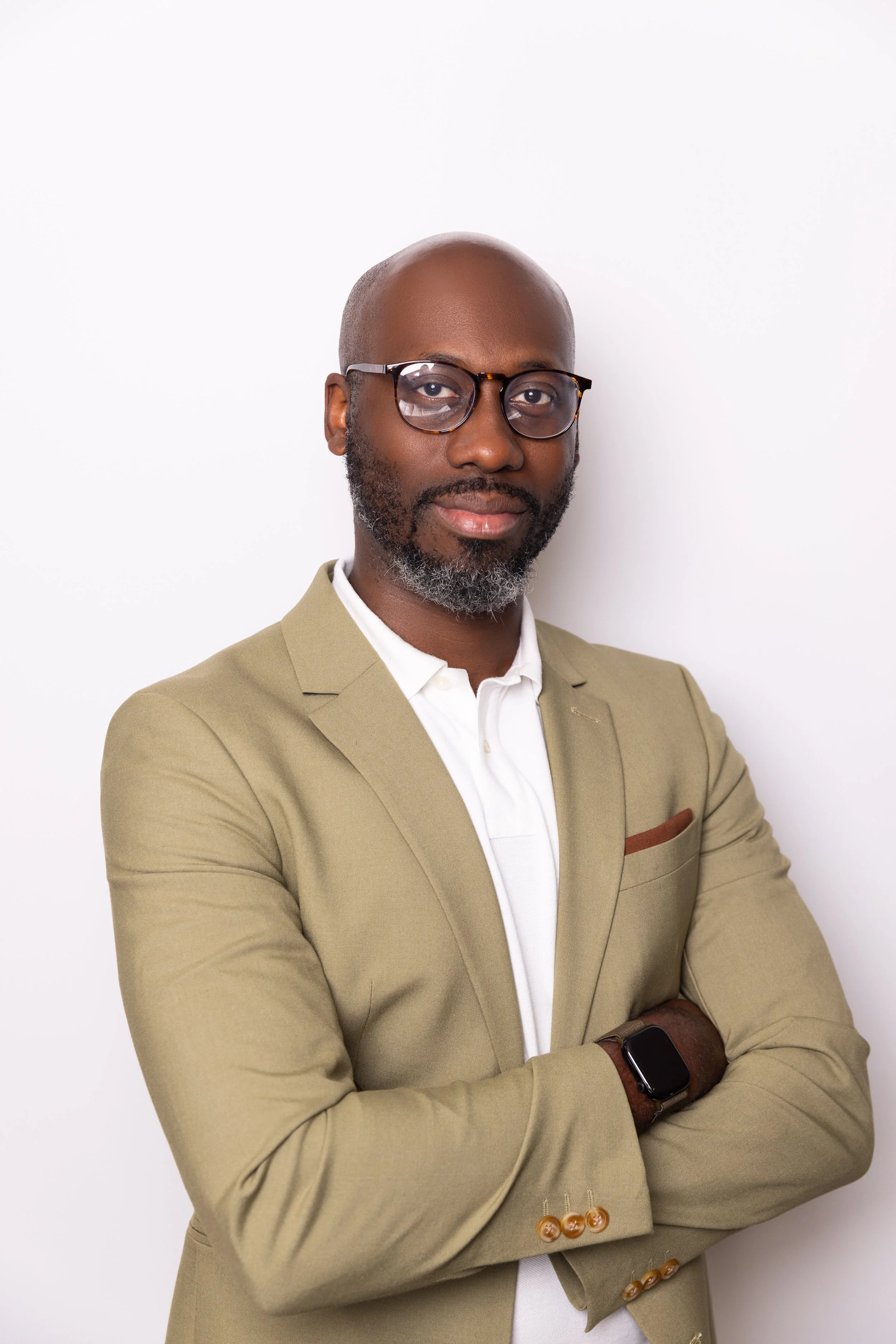
2025 Award Recipient
Robert Harris
Robert’s Idea: More of Us, a program designed to increase male representation in early childhood education through mentorship and networking.
Robert has conceptualized More of Us as a response to the stark reality that less than 3% of early childhood educators are men, with men of color representing less than 1% of the workforce. His program would create a structured mentorship network pairing high school juniors and seniors with current male ECE professionals, featuring periodic meetings and immersive shadowing opportunities over 6-9 months that focus on shared storytelling, skill development, and encouraging young men to see themselves as nurturers and caregivers. Through the Promise Sandbox Award, he envisions demonstrating that this crucial work is rewarding for men while gathering foundational data on whether direct mentorship from male role models can successfully inspire young men to pursue ECE careers. As a Georgetown University faculty member, he sees this pilot as the foundation for rigorous future research that could create a sustainable pipeline of male educators and change agents, ultimately transforming the demographics of a field that desperately needs diverse representation.
Pilot Year Impact
Robert Harris is working to bring more men into the early childhood field.
Right now, men make up just 3% of the early childhood education workforce — and only 1% are men of color. Robert set out to help change that with his 2025 Imagine Award pilot.
Robert built More of Us, a mentorship program and model that connects young men — starting as early as their junior year of high school — with the possibility of a career in early childhood education. It's rooted in his own story: walking into classrooms and conferences as one of the only men, or the only Black man, in the room- a unicorn.
The stakes go beyond representation. Robert has experienced that when children only see one gender in caregiving roles, it can shape their sense of who nurtures and who doesn't – long before they can put that into words.
So he built something that gives young men real touchpoints: mentors paired with mentees and exposure to the field. And it's working. At the end of his pilot, mentors shared that it was being told, and believing, that they mattered in children's lives really made a difference for them.
Receiving the $20,000 in funding let Robert move More than Us from an idea into real development — providing incentives for mentors and mentees and building the momentum to keep growing.
Beyond the funding, Promise's partnership gave Robert validation that his work – a blend of both his lived and professional experience – can be developed at scale.
Q&A with Robert
Recently, we sat down with Robert to hear what he learned from his pilot and how Promise shaped his work.
Here are some highlights from our conversation:
What did you learn from your pilot?
"[More of Us] is a mission to make sure that there are more horses and less unicorns... Right now in early childhood education, 3% of the entire workforce are men and only 1% of them are men of color... So our project focuses on mentorship of young men starting as early as their junior year of high school and guiding them through the process of what it might mean to be an early childhood educator and on a deeper level, what it might mean to be a male who nurtures, who cares, and who works with children birth to around age five or as late as age eight.
When I think about the pilot that Promise helped us develop and implement this year, the thing that stands out to me the most is the feedback we got from the mentors that saw the project the entire way through. And surely enough, it wasn't the honorarium they received; it was their learning. Really and truly, it was the mentorship, the touch points, the education that they were able to receive on what it meant for them as young men, men, men of color in the work of child development. When we were able to pour into them that they matter in the lives of children, that children would benefit from their presence. We actually found out in their exit interviews and recordings that they really enjoyed that, that it stuck with them. And I think it changed ever so slightly, which from a stance that it's been 3% for over two decades, ever so slightly might be the equivalent of a tremendous magnitude when you think about their willingness to be aware of the field and consider working in it.”
How did the Imagine Award’s funding and support help you and your pilot program?
“The $20,000 that we received from Promise made it possible for us to start to consider this work meaningfully. We were able to provide incentives for our mentors and for our mentees to consider ways of promoting and elevating the work. We were able to move past inception, just as an idea, into kind of a development stage and now have the momentum to move forward in considering what we can do and how we can do it going forward. I'm incredibly grateful and I've said this before, as a child development professional, this idea really was just in the womb for a while and Promise I really believe were the hands that nurtured us into the world, brought us into the world and that $20,000 was the equivalent of that first few days in the hospital, enough to get our legs under us and latch well, connect well, get our first bath and all our checkups. And now we're like, all right, cool. We're good to go. I think we can take this baby home and start to grow this idea, this vision into something that's going to stand strong and unique in the world that we live in, especially in the early childhood development space.”
Get to Know Robert
Robert Harris, M.S., LPC, provides training and technical assistance with the National Center on Health, Behavioral Health and Safety related to Head Start, and infant and early childhood education and mental health. For 13 years he has worked in the field of education, supporting behavioral health, mental health, and well-being for children, family, and staff. Robert is a Senior Policy Associate with the Center for Child and Human Development where he provides training and technical assistance in the area of Head Start. His experience in Head Start includes Infant and Early Childhood Consultation, supervising Infant and Early Childhood Consultants, and direct support as a service provider. Robert is also the co-founder of For the Well of It, a private practice therapy and consultation business that encourages wellness and support for educators and people. Personally Robert works to expand support and awareness of staff wellness, parent wellness, and overall wellness.